Direct-to-Garment (DTG) Printing
Direct-to-Garment, commonly called DTG printing, is one of the primary apparel printing methods available for compatible products.
DTG works similarly to an inkjet printer, except the design is printed directly onto the garment. Pigmented, water-based inks are applied to the surface of the fabric and absorbed by the fibers.
This makes DTG well suited to detailed, multi-color artwork, illustrations, photographs, gradients, and other designs on compatible garments, particularly cotton-based products.
What is DTG printing used for?
DTG can be used for compatible products such as:
- T-shirts
- Hoodies
- Sweatshirts
- Joggers
- Tote bags
What does a DTG print look and feel like?
Because the ink is printed directly onto the fabric, DTG does not use a separate transfer film as part of the standard decoration process.
The resulting print generally has a softer hand feel than transfer-based decoration, although the exact feel depends on the garment, fabric, ink coverage, artwork, and production process.
On some products, particularly darker garments, a white underbase may be used beneath the color layer. This can affect the appearance and feel of the printed area.
When is DTG a good choice?
DTG can be suitable for:
- Detailed illustrations
- Multi-color artwork
- Photographic designs
- Personalized graphics
- Custom apparel
- Designs with gradients and fine details
DTG Care
Follow the care instructions provided for the specific product.
For DTG garments, FLY Clothing Co recommends washing cold, washing inside out, and tumble drying on low. FLY Clothing Co also notes that faint odors or visible pretreatment residue on new DTG garments can be temporary and typically disappear after the first wash.
Care note: Product-specific care instructions take priority over general decoration-method guidance.
Visual Reference
Direct-to-Film (DTF) Printing
Direct-to-Film (DTF) is a transfer-based printing method that allows artwork to be applied to a range of compatible fabrics.
With DTF, the artwork is printed onto a special PET film. Adhesive powder and heat are then used to transfer the design from the film onto the product.
Unlike DTG, the artwork is not printed directly onto the garment fibers. Instead, the finished design is transferred onto the fabric.
What is DTF printing used for?
DTF can be used for compatible products such as:
- T-shirts
- Activewear
- Caps
- Selected home décor products
What does a DTF print look and feel like?
Compared with DTG, DTF prints generally have a more noticeable and textured surface because the artwork is transferred onto the fabric.
FLY Clothing Co describes DTF as having a textured feel compared with DTG.
The exact hand feel depends on the product, artwork coverage, fabric, and production process.
When is DTF a good choice?
DTF can be useful for:
- Bold graphics
- Detailed artwork
- Colorful designs
- Designs for different fabric types
- Compatible cotton products
- Compatible polyester products
- Compatible fabric blends
DTF Care
Follow the care instructions provided for the specific product.
Do not assume that every DTF product has identical care requirements because the garment material and product construction can vary.
Care note: The individual product’s care instructions take priority over general DTF guidance.
Visual Reference
All-Over Printing (AOP) and Dye Sublimation
All-Over Printing (AOP) is designed for artwork that covers a much larger portion of a product rather than being restricted to a conventional front, back, or other defined print area.
AOP commonly uses a sublimation-based process in which dyes are applied using heat and pressure. The dyes become absorbed by compatible materials, creating a seamless, smooth finish.
What is AOP printing used for?
AOP and sublimation can be used for compatible products such as:
- T-shirts
- Leggings
- Swimwear
- Masks
- Shoes
- Accessories
- Mugs
- Phone cases
- Home décor products
What makes AOP different from standard shirt printing?
A standard apparel print usually occupies a defined print area.
AOP is designed for much broader coverage and can be used for repeating patterns, artwork, and designs intended to extend across much of the product.
Some AOP apparel is produced using a cut-and-sew process, where printed fabric panels are cut and assembled into the finished product.
Because the product is constructed after the fabric is printed, exact artwork alignment can vary slightly during production.
What is dye sublimation?
Dye sublimation uses heat to transfer dye into a compatible material.
Instead of creating a conventional ink layer on top of the surface, the dye becomes absorbed into the material during production. This produces a smooth decoration with little to no added surface texture from the decoration itself.
When is AOP or sublimation a good choice?
This method can be suitable for:
- Full-coverage patterns
- Repeating artwork
- Colorful designs
- Sportswear
- All-over apparel graphics
- Customized mugs
- Selected accessories
- Selected home décor products
AOP and Sublimation Care
Follow the care instructions supplied with the specific product.
Because sublimation is integrated into compatible material rather than sitting as a conventional printed layer on the surface, the care considerations can differ from transfer-based decoration. However, product-specific instructions should always be followed.
Visual Reference
Embroidery
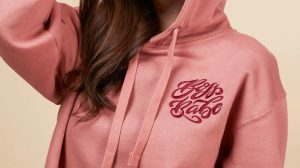
Embroidery uses thread rather than printed ink.
A digital design is converted into stitching instructions, and the design is stitched directly into the product using thread and a needle.
This produces a raised, tactile appearance that is different from a printed graphic.
What is embroidery used for?
Embroidery can be used for compatible products such as:
- Hats
- Caps
- Polos
- Sweatshirts
- Hoodies
What does embroidered decoration look and feel like?
Embroidery creates a physical stitched design on the product.
The decoration has a raised thread texture and can be felt when touched.
Embroidery is particularly suited to logos, lettering, symbols, and artwork that can be translated effectively into thread.
Unlike printed artwork, embroidery is limited by thread colors and by the level of detail that can be reproduced cleanly through stitching.
FLY Clothing Co’s current embroidery guidelines recommend simplified artwork, solid colors, sufficient spacing, and adequate line thickness.
When is embroidery a good choice?
Embroidery can be suitable for:
- Business logos
- Team logos
- Brand names
- Monograms
- Simple artwork
- Hats and caps
- Polos
- Hoodies
Embroidery Care
Follow the care instructions for the specific embroidered product.
Embroidery is physically stitched into the product, but the finished garment or accessory still has product-specific washing and drying requirements.
FLY Clothing Co also notes that slight variations in stitch density or texture and minor simplification of fine details can be normal characteristics of embroidery rather than production defects.
Visual Reference
Specialty Heat Transfer Decoration
Some FLY Clothing Co products may use specialized heat-transfer decoration methods that create distinctive finishes different from conventional DTG, DTF, or sublimation printing.
These methods include Puff Print, Metallic Print, and Glitter Print. FLY Clothing Co identifies these as specialized Heat Transfer Vinyl decoration methods with different visual and technical characteristics.
Puff Print
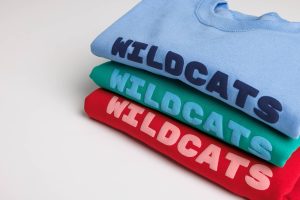
Puff Print creates a raised, three-dimensional effect on fabric.
During production, the puff material expands when heated, causing the design to rise above the garment surface.
FLY Clothing Co describes Puff Print as creating a raised, 3D foam-like effect with a soft, spongy texture.
What does Puff Print feel like?
Puff Print has a noticeably raised and tactile surface.
The defining characteristic is the height of the decoration above the fabric.
When is Puff Print a good choice?
Puff Print can be suitable for:
- Raised lettering
- Bold graphics
- Streetwear-inspired designs
- Three-dimensional artwork
- Designs where texture is part of the visual effect
Puff Print Artwork Requirements
Puff Print requires specific artwork preparation.
FLY Clothing Co currently specifies minimum line thickness, spacing, text height, and limitations on large solid areas because the puff material expands during production.
Puff Print Care
Follow the care instructions supplied with the specific product.
Because Puff Print creates a raised decoration, customers should avoid treating it as an ordinary flat print and should follow the product’s stated washing, drying, and ironing instructions.
Do not apply an iron directly over the decorated area unless the product-specific care instructions explicitly permit it.
Visual Reference
Metallic Print
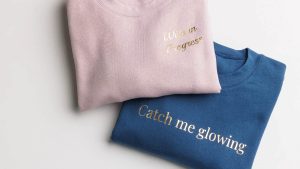
Metallic Print uses precision-cut Heat Transfer Vinyl to create a reflective, high-luster appearance.
The vinyl is cut to the shape of the artwork, excess material is removed, and the design is heat-pressed onto the garment.
FLY Clothing Co describes the result as a reflective, liquid-metal finish.
What does Metallic Print feel like?
Metallic Print creates a distinct vinyl surface that can be felt against the garment.
Its defining visual characteristic is its reflective metallic appearance.
When is Metallic Print a good choice?
Metallic Print can be suitable for:
- Logos
- Lettering
- Fashion graphics
- Designs requiring a metallic finish
- Artwork where surface reflectivity is part of the intended appearance
Metallic Print Artwork Requirements
FLY Clothing Co currently specifies minimum line thickness, spacing, and text height requirements for Metallic Print because the material must be precisely cut and weeded.
Metallic Print Care
Follow the care instructions supplied with the specific product.
Avoid treating the decoration as a conventional ink print, and follow the product’s specific washing, drying, and ironing instructions.
Visual Reference
Glitter Print
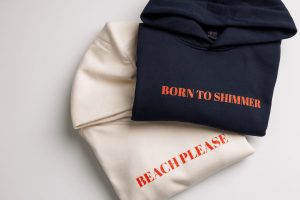
Glitter Print uses glitter Heat Transfer Vinyl to produce a sparkling, textured surface.
The vinyl is cut to the artwork, excess material is removed, and the design is heat-pressed onto the garment.
FLY Clothing Co describes Glitter Print as having a bright, sparkling finish with real surface texture.
What does Glitter Print feel like?
Glitter Print has a visible and tactile surface texture created by the glitter decoration.
When is Glitter Print a good choice?
Glitter Print can be suitable for:
- Decorative graphics
- Logos
- Lettering
- Fashion designs
- Designs where sparkle and surface texture are part of the intended appearance
Glitter Print Artwork Requirements
FLY Clothing Co currently specifies minimum line thickness, spacing, and text height requirements for Glitter Print.
Glitter Print Care
Follow the care instructions supplied with the specific product.
Avoid applying heat directly to the decoration unless specifically permitted by the product’s care instructions.
Visual Reference
Other Decoration Methods
FLY Clothing Co also offers products that may use specialized production methods beyond conventional apparel printing.
Different products require different production technologies, particularly when the material is paper, ceramic, glass, metal, wood, EVA foam, or another specialized surface.
Direct-to-Fabric Printing
Direct-to-Fabric printing applies ink directly to compatible fabric rather than using a separate transfer.
This method can be used with compatible natural-fiber materials such as cotton and linen.
The method is different from sublimation, which uses heat to transfer dye into compatible materials.
Appearance and Feel
The final appearance and hand feel depend on the fabric, ink, artwork, and production process.
Care
Follow the care instructions provided for the specific textile product.
Visual Reference
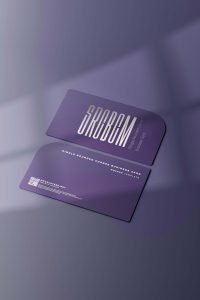
Digital Printing for Paper Products
Professional digital printing can be used for certain paper products.
These can include:
- Posters
- Greeting cards
- Journals
- Photo books
- Coloring books
Digital printing creates a printed surface on the paper rather than a textile decoration.
Appearance and Feel
The appearance and feel depend primarily on the paper stock, finish, ink coverage, and product construction.
Care
Follow the handling and care information provided for the individual paper product.
Visual Reference
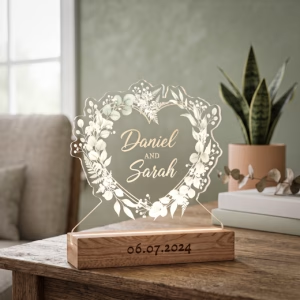
UV Printing
UV printing uses ultraviolet light to cure ink as it is printed onto a compatible surface.
This method can be used for selected hard products, including compatible bottles and tumblers.
Appearance and Feel
UV printing creates a printed decoration on the surface of the product.
The final appearance and surface feel depend on the material, ink coverage, and product finish.
Care
Follow the care instructions for the individual product. Hard-surface products can have different cleaning and handling requirements depending on their material and finish.
Visual Reference
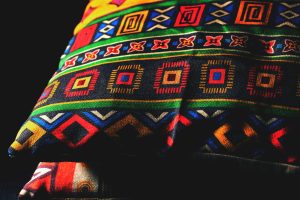
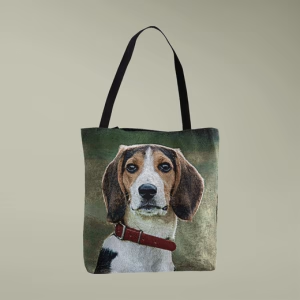
Woven Decoration
Woven decoration creates artwork by weaving colored yarns together.
Instead of applying ink to a surface, different yarn colors are combined to construct the design.
This creates a physical woven texture rather than a conventional printed surface.
Care
Follow the care instructions provided for the specific woven product.
Visual Reference
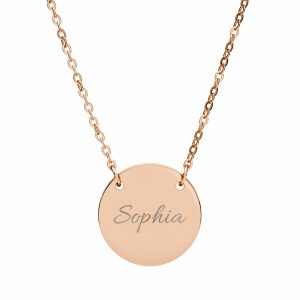
Fiber Laser Engraving
Fiber laser engraving uses a focused laser beam to etch a design into a compatible product surface.
Rather than adding printed ink, the laser creates the design by altering the surface material.
This method can be used for selected products compatible with fiber laser engraving.
Appearance and Feel
The result is an engraved or etched surface rather than an applied ink layer.
Care
Follow the cleaning and care instructions for the individual engraved product.
Visual Reference
CO₂ Laser Engraving
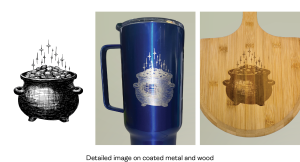
CO₂ laser engraving creates designs by etching the surface of a compatible material.
A CO₂ laser is used to engrave the artwork into the product.
The method is different from printing because the design is created through engraving rather than by applying ink.
Appearance and Feel
The final result is an engraved surface whose appearance depends on the underlying material.
Care
Follow the care instructions for the individual product.
Visual Reference
UV DTF Printing
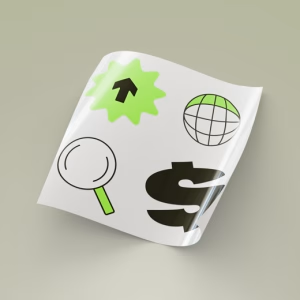
UV DTF printing uses UV-curable inks to create a transfer that can be applied to compatible hard surfaces.
Unlike conventional fabric-focused DTF printing, UV DTF is designed for hard products and can be used on curved or irregular surfaces.
The transfer is applied to the surface similarly to a transfer sticker.
Appearance and Feel
UV DTF creates a distinct transferred surface on the hard product.
Care
Follow the care instructions for the individual product. Cleaning and handling requirements can vary according to the hard surface and product construction.
Visual Reference
Decoration Methods by Product Category
Because FLY Clothing Co offers different types of customizable products, the available decoration method can vary significantly from one product category to another.
The following examples show the types of methods that may be available. They are not a guarantee that every product within a category supports every listed method.
| Product category | Possible decoration methods |
|---|---|
| T-shirts | DTG, DTF, AOP/sublimation, specialty heat transfer |
| Hoodies & sweatshirts | DTG, DTF, embroidery, specialty heat transfer |
| Joggers | DTG and other compatible methods |
| Activewear | DTF, AOP/sublimation, and other compatible methods |
| Hats & caps | Embroidery, DTF, and other product-specific methods |
| Polos | Embroidery and other compatible methods |
| Tote bags | DTG and other compatible methods |
| Mugs | Sublimation and other product-specific methods |
| Bottles & tumblers | Sublimation, UV printing, and other compatible methods |
| Hard-surface products | UV printing, UV DTF, laser engraving, or other compatible methods |
| Paper products | Digital printing |
| Woven products | Woven decoration |
| EVA foam clogs | 3D heat transfer |
| Selected ceramic products | Sublimation |
The actual decoration method is determined by the specific product and its available production options.
What Affects the Final Appearance?
The decoration method is only one part of the finished result.
The final appearance and feel can also be affected by:
- Product material
- Product color
- Product construction
- Artwork complexity
- Artwork dimensions
- Print area
- Decoration method
- Ink, transfer, thread, or engraving characteristics
- Available production technology
- Product-specific production requirements
For example, DTG results can vary depending on garment color and the use of a white underbase, while AOP products can have slight variation in artwork alignment because of their construction process.
For this reason, the decoration method should always be considered together with the product and artwork.
Hand Feel and Surface Texture
For apparel, the decoration method can affect how the finished design feels when touched or worn.
DTG
Generally has a softer printed hand feel because the ink is applied directly to the fabric.
DTF
Has a more noticeable, textured surface compared with DTG.
Sublimation
On compatible products, the dye becomes absorbed into the material, creating a smooth decoration with little or no added surface texture from the decoration.
Embroidery
Creates a raised, tactile texture because the design is made from physical thread.
Puff Print
Creates a raised, three-dimensional, soft or spongy texture.
Metallic Print
Creates a distinct transfer surface with a reflective metallic appearance.
Glitter Print
Creates a visible and tactile glitter surface.
The exact hand feel can vary according to the product, fabric, artwork coverage, and production configuration.
Artwork Requirements by Decoration Method
Artwork requirements are not identical across all decoration methods.
A design that works well for DTG may require modification before it can be used for embroidery, Puff Print, Metallic Print, Glitter Print, AOP, or laser engraving.
Important considerations can include:
- File format
- Image resolution
- Design dimensions
- Line thickness
- Text size
- Spacing between design elements
- Transparency
- Print area
- Safe areas
- Bleed areas
- Product-specific requirements
FLY Clothing Co currently supports JPEG, PNG, and SVG files, while specific file requirements can vary by product and print area.
Specialty methods can have additional requirements. Puff Print, Metallic Print, and Glitter Print have specific minimum line, spacing, and text requirements.
Embroidery also has specific requirements for line thickness, text height, colors, spacing, and artwork complexity.
For complete artwork preparation information, see the Artwork Requirements guide.
Choosing the Right Decoration for Your Design
The right decoration method depends on the product and the type of artwork you want to use.
Detailed, multi-color artwork
DTG can be suitable for detailed designs on compatible cotton-based products.
Bold graphics across compatible fabrics
DTF can be suitable when a transfer-based decoration method is available for the selected product.
Full-coverage patterns
AOP or sublimation can be suitable for products designed for all-over decoration.
Logos and stitched designs
Embroidery can be suitable when you want a textured thread-based finish.
Raised artwork
Puff Print can create a three-dimensional effect.
Metallic appearance
Metallic Print can create a reflective metallic finish.
Sparkling artwork
Glitter Print can add a textured glitter finish.
Hard products
UV printing, UV DTF, sublimation, or laser engraving may be used depending on the product and material.
The available method is determined by the specific product and its available production options.
Care and Maintenance
Decoration methods do not all have identical care requirements.
The safest approach is to follow the care instructions listed for the exact product you are purchasing, because those instructions account for the product’s fabric, construction, decoration method, and production specifications.
For apparel:
- Check the product-specific washing instructions before cleaning.
- Use the recommended water temperature.
- Follow the recommended drying method.
- Do not apply direct heat to printed or decorated areas unless the product instructions permit it.
- Turn garments inside out when the product care instructions recommend it.
- Avoid treating every decoration method as though it has identical washing and drying requirements.
FLY Clothing Co specifically recommends following the care instructions provided with each product and notes that proper care helps maintain the product’s colors and overall quality over time.
For DTG garments, FLY Clothing Co recommends cold washing, washing inside out, and tumble drying on low.
Product-specific care instructions always take priority over the general information on this page.
Understanding Product Images and Samples
Product mockups are useful for showing the overall appearance of a customized product, but a digital mockup cannot always communicate the exact physical texture of a decoration.
For example:
- Puff Print is easier to understand from a side-angle photograph.
- Embroidery is easier to understand from a macro photograph showing the individual stitches.
- DTF is easier to evaluate when the transferred surface can be seen close up.
- Metallic Print benefits from directional lighting that shows its reflective finish.
- Glitter Print benefits from close-up photography showing its surface texture.
- Sublimation is easier to understand when the smooth printed surface is shown close up.
FLY Clothing Co notes that mockups are representations rather than a 1:1 guarantee and recommends ordering samples to understand the actual product and decoration result.
FLY Clothing Co Visual Reference Strategy
Where practical, FLY Clothing Co may use:
- High-resolution macro photographs
- Angled close-up photographs
- Detail photographs
- Short looping videos or GIFs
- Full-product photographs alongside close-up decoration images
These visuals help customers understand not only what the design looks like, but also how the decoration physically appears on the product.
Which Decoration Method Will My Product Use?
There is no single decoration method that works for every custom product available through FLY Clothing Co.
The method depends on factors such as:
- Product type
- Material
- Product construction
- Available print area
- Artwork requirements
- Available decoration options
- Production requirements
For example, a custom shirt may use DTG or DTF, a product designed for full-surface artwork may use AOP or sublimation, a compatible hat may use embroidery, and a compatible tumbler may use sublimation or UV printing.
The specific decoration method available for your order is shown on the applicable FLY Clothing Co product page.
Can I Choose the Decoration Method?
The available decoration options depend on the individual FLY Clothing Co product.
Some products may offer more than one decoration option. When multiple options are available, those options may be shown as available production choices for that product.
Other products may have a specific decoration method associated with the product.
Customers should not assume that one decoration method can be substituted for another simply because both methods are available elsewhere in the FLY Clothing Co catalog.
Always check the decoration options shown on the specific product page before placing an order.
Frequently Asked Questions About Custom Printing & Decoration Methods
What printing methods does FLY Clothing Co use?
FLY Clothing Co offers customizable products produced through their fulfillment network. Depending on the product, available decoration methods can include DTG, DTF, AOP and sublimation, embroidery, specialty heat-transfer decoration, UV printing, laser engraving, woven decoration, digital printing, and other product-specific techniques.
What is DTG printing?
DTG, or Direct-to-Garment printing, prints water-based pigment ink directly onto a compatible garment. It is particularly suitable for detailed and multi-color designs on compatible cotton-based products.
What is DTF printing?
DTF, or Direct-to-Film printing, prints artwork onto a special film before transferring it onto a compatible product using adhesive and heat. It can be used across a range of compatible fabrics.
What is the difference between DTG and DTF?
DTG prints directly onto the garment and the ink is absorbed by the fibers. DTF prints onto a transfer film and then applies the design to the garment using heat and adhesive.
DTF generally has a more textured feel than DTG.
What is sublimation printing?
Sublimation is a heat-based process in which dye is transferred into a compatible material. It can be used for compatible apparel, mugs, accessories, home décor products, and other products offered through FLY Clothing Co.
What is all-over printing?
All-over printing, or AOP, is designed to cover a much larger portion of a product with artwork. It can be used for compatible apparel, accessories, shoes, mugs, phone cases, and home décor products.
What is embroidery?
Embroidery creates a design by stitching thread directly into the product. FLY Clothing Co offers products with embroidery when that decoration method is available for the selected product.
What is Puff Print?
Puff Print is a specialty decoration method that creates a raised, three-dimensional effect. FLY Clothing Co describes it as having a soft, spongy texture.
What is Metallic Print?
Metallic Print uses precision-cut Heat Transfer Vinyl to create a reflective, high-luster finish on compatible garments.
What is Glitter Print?
Glitter Print uses glitter Heat Transfer Vinyl to create a sparkling, textured design on compatible garments.
Can I choose the printing method for my product?
The available decoration options depend on the individual FLY Clothing Co product.
When a product supports multiple decoration methods, the available options are shown on the applicable FLY Clothing Co product page.
If only one decoration method is available for the selected product, that method is determined by the product’s production configuration.
How does each printing method feel?
Different decoration methods create different surface characteristics.
DTG generally has a softer printed hand feel, DTF has a more noticeable textured surface, sublimation produces a smooth finish on compatible materials, embroidery creates raised thread texture, and Puff Print creates a raised three-dimensional texture.
The exact feel can vary by product and artwork.
How should I wash custom printed clothing?
Always follow the care instructions for the specific product.
For DTG garments, FLY Clothing Co recommends cold washing, washing inside out, and tumble drying on low. Other products and decoration methods can have different care requirements.
Can I iron over a printed design?
Follow the care instructions for the specific product.
Do not assume that every decoration method can be exposed to direct heat. Specialty transfer decorations and raised decorations can have different care requirements.
Which decoration method is used for custom hats?
FLY Clothing Co offers hats and caps with the decoration methods available for each individual product.
This can include embroidery and, where offered for a particular product, other methods such as DTF.
The available decoration method is shown on the applicable FLY Clothing Co product page.
Which decoration methods are used for mugs?
FLY Clothing Co offers mugs with the decoration method available for each individual product.
Sublimation is used for compatible mugs and other products, while different hard-surface products may use other technologies.
The available decoration method is shown on the applicable FLY Clothing Co product page.
Which decoration methods are used for drinkware?
FLY Clothing Co offers drinkware using the decoration methods available for each specific product.
These can include sublimation and UV printing for compatible bottles and tumblers.
The available decoration method is shown on the applicable FLY Clothing Co product page.
Does every custom product use the same printing method?
No.
Different products require different decoration methods based on their materials, construction, artwork requirements, print areas, and available production options.
The specific decoration method for a product is shown on its FLY Clothing Co product page.
Who do I order my custom products from?
You order your products directly from FLY Clothing Co through the FLY Clothing Co website.
FLY Clothing Co manages the customer-facing product pages, ordering process, and customer relationship. FLY Clothing Co coordinates the production and fulfillment network used to produce and fulfill eligible orders.
Who produces and fulfills FLY Clothing Co products?
All FLY Clothing Co products are printed on demand and fulfilled through our network of high-precision US production facilities
Orders are automatically routed to regional hubs—including key locations in LA and NYC—closest to your delivery address to ensure fast transit times and consistent quality.
Explore Custom Products
Choose a product based on the item you need, the material, the artwork you want to use, and the decoration options available for that product.
Browse FLY Clothing Co custom products to find customizable shirts, apparel, headwear, drinkware, accessories, and other products.
For artwork preparation, use the Artwork Requirements guide to understand how your design should be prepared for different types of products and decoration methods.
For information about how orders are produced and delivered, see Shipping Conditions & Process.
To understand the different production technologies available across FLY Clothing Co products, return to this Custom Printing & Decoration Methods guide when selecting a new custom product.
Important Product Note
Decoration methods, product availability, print areas, colors, materials, care instructions, and eligible products can vary as products and production options change.
Always check the decoration options and care instructions shown on the specific FLY Clothing Co product page before placing an order.
The information in this guide explains the general decoration technologies used across compatible products. It does not mean that every method is available for every FLY Clothing Co product.
Product-specific care instructions take priority over general care information on this page.